Newark, New Jersey
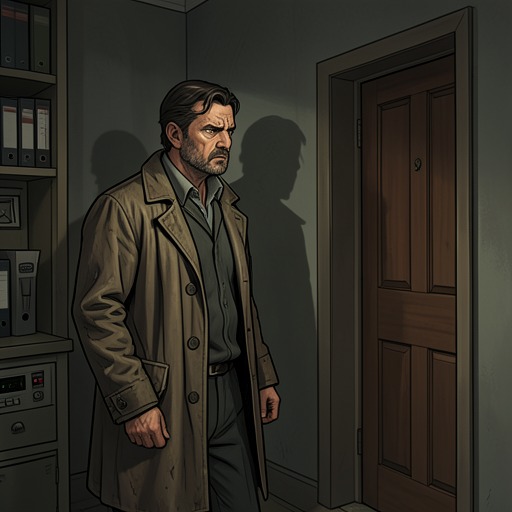
The Good Nurse: A True Story of Medicine, Madness, and MurderNewark, New Jersey, is both a setting for Tim Braun’s formation as a homicide detective and a force that tests what he believes police work can accomplish. In the 1990s, its relentless volume of murder trains him to sort deaths into priorities; the stalled case of Ethel Duryea, a nurse killed in an affluent suburb, shows him how quickly those priorities can serve institutional power instead of justice. The city later reappears as the home of the New Jersey Department of Poison Control’s deteriorating offices, a setting that brings the investigation of suspected hospital poisonings into the same urban landscape.
A city organized by violence
The book presents Newark through the working habits its violence imposes. Deaths arrive in a shifting sequence: a detective on call may receive none or several in one twenty-four-hour shift, and every new murder can displace the case that had seemed most urgent. The label redball marks a case temporarily at the top of the pile, but its priority can fade as soon as another body changes the order. The system’s pace makes attention scarce as well as necessary.
Braun’s account of the city’s death work is deliberately unsentimental. The location of a body offers an initial frame for investigation: bodies on a corner are generally treated as murders, those on the tracks as difficult scenes, and those in the river as mysteries. He recalls stories of police pushing bodies in the Passaic toward another jurisdiction. These details show how geography, jurisdiction, and investigative habit become entangled; even the river can appear as a boundary across which responsibility might be passed.
The wider description of Newark in the 1990s is stark: Time magazine called it the most dangerous city in America, while corruption was widely associated with it. The Essex County Prosecutor’s Office had only ten detectives to cover about four hundred calls a year. Braun’s work therefore unfolds amid both extraordinary violence and limited investigative capacity. He learns that many cases begin with drugs and end with a gun, and that the steady arrival of dead children can make the distinction between good and bad actors increasingly difficult to sustain.
Braun’s formation as a detective
Newark becomes central to Braun’s career after an earlier encounter with death in nearby Livingston. As a teenager, he worked security at Saint Barnabas Medical Center, where he carried elderly patients’ bodies without yet experiencing them as individual victims. Later, as a patrol officer, he came upon a murdered man near a river; the sight of the ordinary clothes and the wound made that death matter to him. He then took the tests to transfer to Newark and pursue homicide work.
The move brings him into a profession that consumes his time and draws him toward its own rough culture. He is often at work or away from home, drawn to the adrenaline and social life of the job. Alcohol helps him push other concerns aside until he requests a three-month leave, spends his thirtieth birthday in a rehabilitation facility, takes up judo, and returns sober. His later work in Newark is not presented as a clean recovery or a simple heroic calling: he earns medals and learns the routines of the job, but also sees how the city’s constant cases and institutional habits can wear down personal judgment.
Braun’s experience of Newark is not only about the volume of violence. In Livingston, he had been reprimanded for swearing at civilians; in Newark, he finds that people may be grateful simply to avoid being beaten, while complaints can disappear amid the flow of cases. He recognizes that the machinery can absorb misconduct as readily as it processes investigations. That recognition acquires particular force when he works on Duryea’s murder.
The Duryea case and the limits of justice
Duryea, a respected fifty-year-old nurse, is found shot on a snowy sidewalk in an affluent Newark suburb. Her purse remains untouched, and the scene offers no witnesses, suspects, or leads beyond the bullet. Braun eventually connects that bullet to a gun, and the gun to a multimillion-dollar insurance scheme involving the sale of privileged patient information from local emergency rooms to lawyers pursuing slip-and-fall cases. The investigation raises the possibility that Duryea was killed because she had exposed wrongdoing.
As Braun follows that possibility, he is warned by his superiors to leave the case alone. When he persists, he is temporarily removed from Homicide and assigned to courthouse work. He comes to understand that the case may remain unsolved not because no path has been found, but because following it threatens people with political influence. The contrast is consequential: the city’s ordinary cases teach him to keep moving, while Duryea’s case makes him see that the power to investigate is itself constrained.
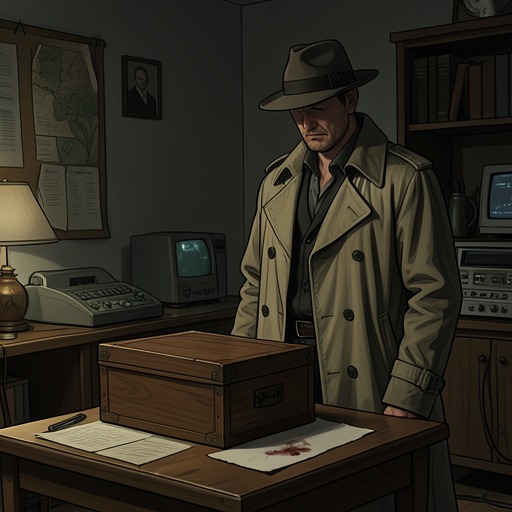
Braun’s investment in Duryea is personal. He has grown close to her family and wants to identify her killer, but he realizes that his position may serve the machinery of power more than the victim. Although the case is officially left cold, he knows he found the gun that killed her. The unresolved knowledge stays with him, represented in the narrative by Duryea’s ghost sitting on his conscience. Braun develops shingles, takes sick days for the first time in ten years, spends time with his family, and leaves Newark for a homicide position in Somerset County. The move changes his working conditions, but the cold case remains with him, kept in a cardboard box in his closet.
Poison Control and the later investigation
Newark also contains the old offices of the New Jersey Department of Poison Control. When Braun and Danny Baldwin go there in connection with suspected poisonings at Somerset Medical Center, the center is due to move out of Newark within months. Its entrance is chained off; broken furniture and stained carpet lie in the corridors, and Poison Control seems to be the building’s last remaining tenant. The detectives expect a laboratory, but find an office crowded with books, papers, and poison-related objects instead.
This brief return to Newark gives the investigation a setting marked by institutional neglect rather than the visible urgency of a crime scene. The detectives need expertise and evidence to understand events at a hospital, yet the place they visit offers no cinematic laboratory or immediate solution. Newark thus connects two stages of the book’s account: Braun’s earlier education in the pressures and failures of homicide work, and the later effort to investigate suspected patient poisonings across professional and institutional boundaries.